Local SEO for Dentists and Private Clinics: How to Win Patients Searching Nearby
Local SEO for dentists helps dental practices and private clinics appear in relevant searches on Google Search and Google Maps. It focuses on improving practice listings, treatment pages, local visibility, and the information patients need before booking an appointment.
For wider tactics beyond local search, see our healthcare SEO strategies for patient acquisition.
When someone searches for “private dentist in Manchester” or “dental clinic near me”, they’re usually looking for a suitable practice in a convenient location.
But appearing in search results is only part of the process. Patients also need accurate information about treatments, fees, availability, and professional qualifications.
This guide explains how dental practices can improve local SEO, manage patient reviews responsibly, and turn relevant local searches into appointment enquiries.
Why Is Local SEO Important for Dentists and Private Clinics?
Local SEO helps dental practices reach people searching for dental care within a specific area.
In practice, patients often consider location alongside treatment availability, professional qualifications, fees, and appointment options.
For example, someone searching for an emergency dentist in Leeds may need different information from a patient researching private orthodontic treatment.
Therefore, an effective dental SEO strategy should address those different needs.
Improve Visibility for Relevant Searches
A dental practice can target searches related to its location and genuine services, such as general dentistry, hygienist appointments, or dental implants.
Google considers relevance, distance and prominence when determining local results.
Optimising your online presence can support visibility, but it doesn’t guarantee a particular Google Maps ranking.
Help Patients Make Informed Choices
Patients need reliable information before contacting a clinic.
Clear treatment explanations, accurate practitioner details, and accessible contact information can help them assess whether a practice meets their needs.
Support Appointment Enquiries
Above all, relevant visibility should help patients find the correct practice and understand how to enquire.
The objective isn’t simply increasing website traffic. It’s reaching people who are looking for services the clinic genuinely provides.
For an overview of local ranking factors, read our complete guide to local SEO.
How Does Local SEO for Dentists Work?
Local SEO for dentists combines several activities that help search engines and patients understand a practice.
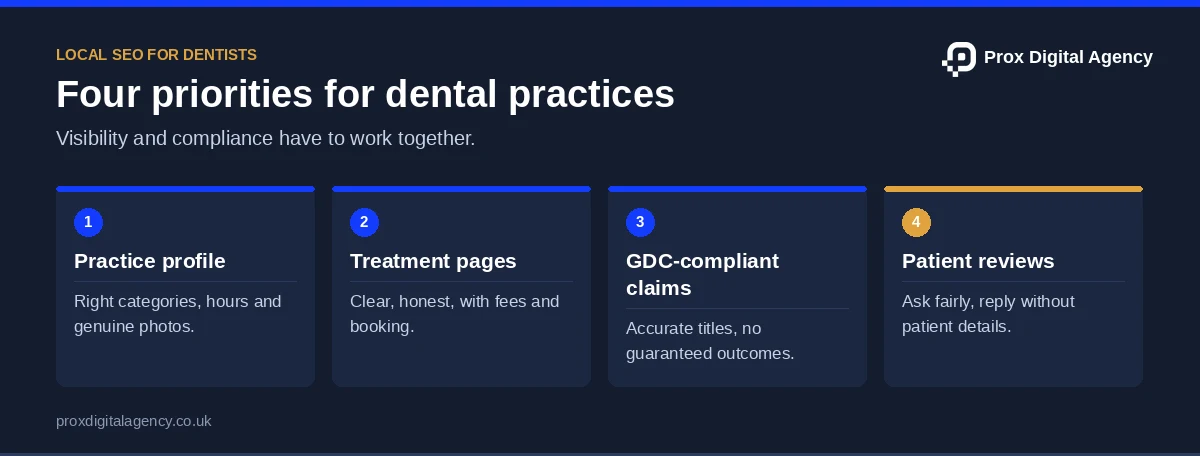
These include maintaining an accurate Google Business Profile, developing relevant treatment pages, managing reviews, and ensuring business information remains consistent.
The approach also needs to reflect healthcare-specific requirements.
Unlike many retail businesses, dental practices provide services that can directly affect patients’ health.
Google places particular importance on trustworthy information for health-related topics, while UK dental professionals must comply with relevant professional advertising standards.
As a result, this makes accuracy and professional credibility essential throughout the website. Professional firms can compare this with our guide to local SEO for law firms.
Step 1: Optimise Your Dental Practice’s Google Business Profile
A Google Business Profile helps eligible dental practices manage how their details appear on Google Search and Maps.
For example, it can display the practice’s address, telephone number, opening hours, category and customer reviews.
Choose Accurate Business Categories
Select a primary category that best represents the practice.
Relevant additional categories may be appropriate when they accurately reflect the services provided.
For example, a general dental practice shouldn’t select specialist categories for treatments it doesn’t offer.
Also, avoid adding promotional keywords to the official practice name.
Keep Practice Information Updated
Check the following details regularly:
- Practice name and address
- Telephone number and website
- Opening and appointment hours
- Relevant treatment information
- Accessibility and facilities, where supported
- Genuine photographs of the premises
If the practice changes its opening hours or relocates, update the profile promptly.
Understand Individual Dentist Profiles
Google’s guidelines for representing your business permit separate profiles for eligible public-facing practitioners, including dentists, under specific conditions.
However, not every staff member needs an individual profile.
However, practitioner listings should comply with Google’s requirements, including direct contact and the ability to be reached at the verified location during the stated hours.
Equally, avoid creating multiple profiles solely to target different treatments.
For detailed set-up guidance, use our Google Business Profile optimisation checklist.
Step 2: Target Relevant SEO Keywords for Dentists
Dental keyword research should reflect the treatments patients are searching for and the locations your clinic actually serves.
After all, different searches indicate different needs.
For example, “dentist in Bristol” is a broad location-based query, while “private dental implants Bristol” relates to a more specific treatment.
Identify Your Main Search Categories
First, begin by grouping keywords into relevant categories.
However, these are illustrative examples, not confirmed search-volume opportunities.
Match Keywords to Relevant Pages
Each important treatment should have an appropriate page explaining what the clinic provides.
In other words, avoid placing every dental keyword on the homepage.
A patient researching dental implants needs different information from someone looking for a routine examination.
Also, use natural wording and prioritise accurate descriptions over repeating location keywords.
Avoid Targeting Unavailable Treatments
Don’t create pages advertising treatments your practice doesn’t provide.
Similarly, avoid using specialist terminology that inaccurately describes a dentist’s qualifications or registration status.
Instead, your content should reflect the services and professional expertise genuinely available at the clinic.
Step 3: Create Clear and Useful Dental Treatment Pages
Treatment pages should help patients understand what a service involves and whether they may need an appointment.
However, they should not make clinical promises or replace professional advice.
Explain Each Treatment Clearly
A useful treatment page may include:
- A straightforward explanation of the treatment
- Who may be suitable for an assessment
- The general consultation process
- Relevant limitations or considerations
- Fees or available pricing information
- How to arrange an appointment
For example, a teeth-whitening page should explain that suitability requires professional assessment rather than promising identical results for every patient.
Include Accurate Professional Information
Identify appropriately qualified clinicians and describe their experience accurately.
For dentists in the UK, relevant professional qualifications and General Dental Council registration information should be available as required.
Also, avoid unsupported statements such as “the UK’s leading dentist” or claims about guaranteed treatment outcomes.
Make Enquiries Straightforward
Finally, include clear contact information and appointment booking options.
Patients should be able to identify the clinic’s location and whether the advertised treatment is available there.
For more healthcare-specific website guidance, see our healthcare SEO strategies for patient acquisition and our work in healthcare digital marketing.
Step 4: Follow UK Dental Advertising and Compliance Standards
Dental SEO must account for the professional obligations associated with promoting healthcare services.
The General Dental Council requires dental advertising to be accurate, truthful and not misleading.
In practice, this applies to treatment pages, promotional material and other information used to attract patients.
Clearly Explain Practice Status
Practices should make clear whether they provide NHS, private or mixed dental services.
This helps patients understand the type of care available before enquiring.
Avoid advertising NHS appointments or availability where the practice cannot provide them.
Represent Qualifications Accurately
In addition, the GDC restricts how certain specialist titles can be used.
Dentists shouldn’t describe themselves as specialists unless they’re appropriately listed on the relevant GDC specialist register.
Practices should also display required professional and contact information.
Avoid Unsupported Treatment Claims
Marketing content should not guarantee clinical outcomes or suggest that a procedure is suitable for everyone.
For example, cosmetic dentistry information should explain that treatment suitability depends on an individual assessment.
Dental marketing should support informed choices rather than create unrealistic expectations.
Want more patients from searches near your practice?
We will review your practice profile, treatment pages and reviews and show you where patients are slipping away, free.
Step 5: Manage Patient Reviews Responsibly
Patient reviews can influence how prospective patients assess a dental practice.
Google also confirms that review quantity and positive ratings can contribute to local prominence.
However, healthcare reviews require particular care because they may reveal sensitive personal information.
Request Genuine Patient Feedback
Where appropriate, practices may invite patients to leave honest Google reviews.
Above all, keep requests voluntary and neutral.
Don’t provide incentives, ask for a particular rating or selectively request reviews only from satisfied patients.
A simple invitation could read:
“If you’d like to share feedback about your experience with our practice, you can leave a Google review using this link.”
Any review request process should also comply with applicable privacy and electronic marketing requirements.
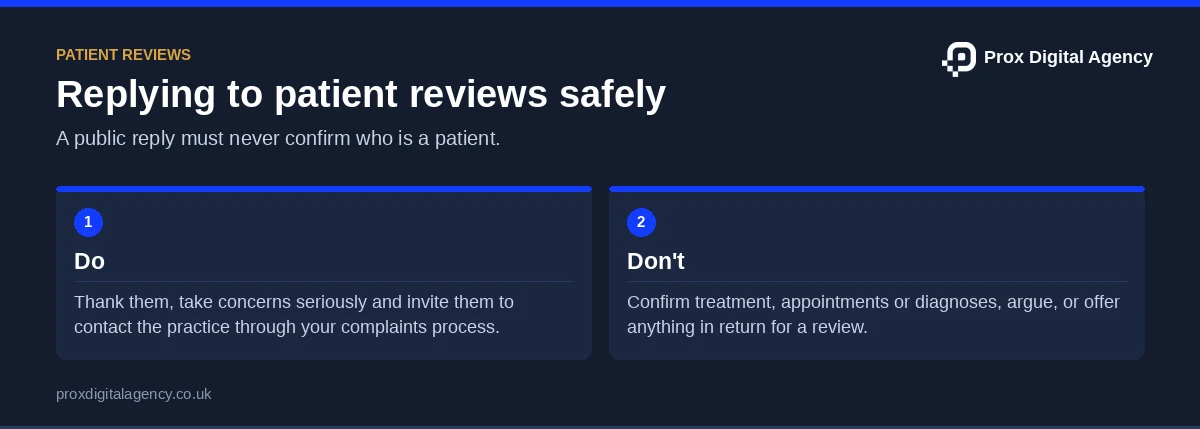
Respond Without Disclosing Patient Information
A patient may publicly mention a treatment or appointment, but that doesn’t give the practice permission to disclose confidential information in its reply.
Avoid confirming treatment details, diagnoses or appointment records publicly.
A suitable response to a complaint might be:
“Thank you for sharing your feedback. We take concerns seriously and would welcome the opportunity to discuss this through our usual complaints process. Please contact the practice directly.”
In this way, this acknowledges the feedback without revealing private information.
Don’t Attempt to Manipulate Reviews
Google prohibits fake reviews, incentives, and selectively soliciting positive feedback.
Practices should also avoid pressuring patients to submit reviews while staff supervise them.
For more guidance, read our guide on how to get more Google reviews.
Step 6: Maintain Accurate Local Business Listings
Dental practices may appear on Google Maps, Apple Maps, Bing Maps, and relevant healthcare directories.
As a result, accurate information across these platforms helps patients find the correct premises and contact details.
Check NAP Consistency
NAP stands for Name, Address, and Phone number.
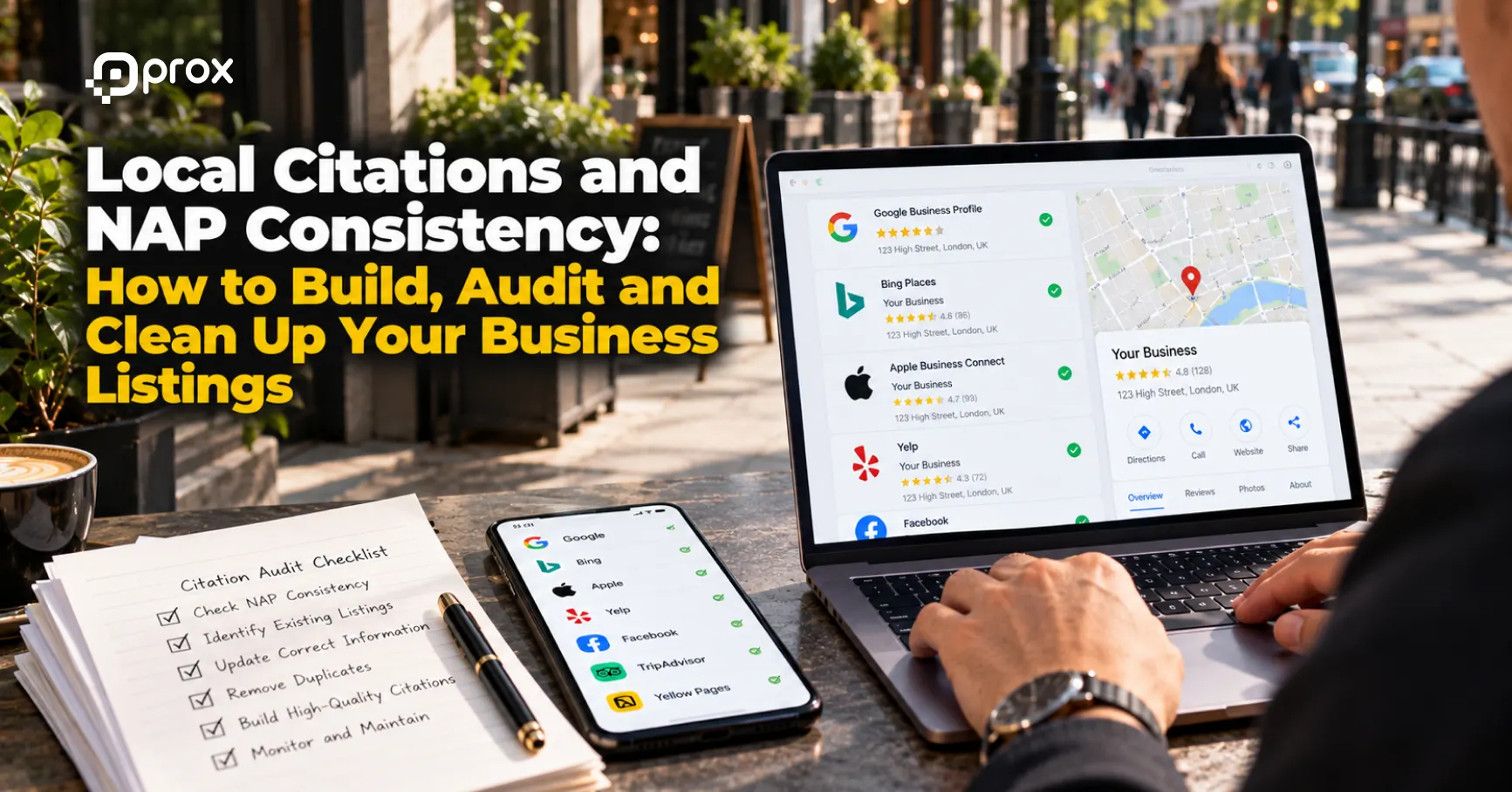
Review your practice information across important listings and correct significant inaccuracies. Accurate business listings matter too, so see our guide to local citations and NAP consistency.
An outdated address or telephone number can create confusion for patients trying to book or attend appointments.
Review Professional and Healthcare Directories
Relevant professional and healthcare directories can support business discovery.
However, only claim or create listings where the practice or practitioner meets the platform’s requirements.
Avoid submitting identical information to large numbers of unrelated directories purely to acquire links.
Update Information After Practice Changes
Relocations, rebranding, and changes to telephone numbers should trigger a review of important listings.
Similarly, practices with multiple branches should keep a separate record for each genuine location.
Step 7: Build Trust Through Relevant Local Content
Local dental content should answer questions patients commonly ask before choosing a practice or treatment.
Useful content can support organic search visibility while helping patients make informed decisions.
Address Common Patient Questions
Potential topics include:
- What happens during a first dental appointment?
- What should patients consider when choosing a private dentist?
- How do routine dental check-ups work?
- When should someone contact a dentist about a dental concern?
In all cases, clinical information should be accurate, appropriately reviewed and consistent with established professional guidance.
Show Genuine Practice Experience
Information about the team, facilities and services can help prospective patients understand the clinic.
Where appropriate, introduce clinicians with accurate qualifications and professional backgrounds.
Avoid using patient stories or clinical images without an appropriate lawful basis, permissions and compliance review.
Keep Health Information Current
Review clinical content when guidance changes or treatments are updated.
Identify relevant professional sources and consider clinical review by a suitably qualified practitioner.
Google’s guidance on helpful content places particular emphasis on trustworthiness for subjects that may affect people’s health.
Step 8: Improve Your Dental Website’s Patient Experience
A dental website should be easy to navigate, especially on mobile devices.
Patients may be searching for contact details, treatment information or appointment availability.
Make Important Information Accessible
Include clear navigation to treatments, clinician profiles, contact details and booking information.
Avoid hiding essential details behind unnecessary forms or multiple navigation steps.
Check Mobile Usability
Test important pages on smartphones.
Telephone links, appointment buttons, and forms should function correctly.
Use readable text and avoid layouts that make treatment information difficult to access.
Review Website Performance
Google Search Console and PageSpeed Insights can help identify indexing and performance issues.
Address significant problems affecting usability, such as broken links, slow-loading pages, or unstable layouts.
Technical improvements support the website experience, but they don’t guarantee higher local rankings.
Add Dentist Schema Markup
Mark up each practice page with the schema.org Dentist type, a LocalBusiness subtype, including the practice name, address, phone number and opening hours shown on the page. Our schema markup guide explains how to add and test it.
Step 9: Strengthen Local Relevance Through Community Connections
Relevant professional relationships and genuine local mentions can help dental practices establish a broader online presence.
Possible opportunities include participation in community oral-health education, professional associations, and relevant local publications.
For example, a practice contributing to a community dental-health awareness event may receive an editorial mention from the organiser.
The activity should provide genuine community value rather than exist solely to obtain a backlink.
Avoid paid link schemes or arrangements intended to manipulate search rankings.
For clinics serving several areas, prioritise the communities where they actually operate and provide care.
Step 10: Measure Local SEO Performance for Dentists
Local SEO for dentists should be evaluated through both search visibility and meaningful patient enquiries.
Higher website traffic doesn’t necessarily mean more appointments.
Monitor Relevant Search Visibility
Use Google Search Console to review impressions, clicks, and relevant treatment searches.
Google Business Profile performance reporting may also show customer interactions.
Remember that a telephone click doesn’t confirm a completed call or appointment.
Track Appointment Enquiries
Where practical and lawful, measure:
- Enquiry form submissions
- Appointment booking requests
- Telephone enquiries
- Relevant treatment page visits
- Search visibility across practice locations
Avoid collecting unnecessary health information through marketing analytics.
Patient health data requires appropriate safeguards under UK data protection law.
Review Trends Over Time
Compare performance across meaningful periods.
Consider treatment demand, seasonal changes and practice availability when interpreting results.
A clinic with limited appointment capacity may need to prioritise relevant enquiries rather than simply increasing visitor numbers. If you want specialist help, our local SEO services for dental practices cover profiles, treatment pages, reviews and enquiry tracking.
Common Mistakes in Local SEO for Dentists
Dental practices should avoid several common issues that can affect accuracy, trust and search visibility.
Using Incorrect Treatment Categories: Business listings should reflect services genuinely available.
Making Unsupported Clinical Claims: Treatment outcomes and suitability must not be misrepresented.
Publishing Generic Treatment Pages: Content should answer meaningful patient questions rather than repeat keywords.
Disclosing Patient Information: Public review replies must protect confidentiality.
Creating Duplicate Practice Listings: Separate profiles require legitimate eligibility.
Ignoring Appointment Usability: Visitors should be able to locate contact details and booking information easily.
Measuring Traffic Alone: Enquiries and completed appointments are more meaningful business outcomes than visits without context.
Frequently Asked Questions About Local SEO for Dentists
How Can Dentists Rank Higher on Google Maps?
Dental practices should maintain accurate Google Business Profiles, relevant treatment information, and genuine patient reviews. Google considers relevance, distance, and prominence, so no individual optimisation guarantees higher rankings.
Is Local SEO Different for Private Dental Clinics?
The core principles are similar, but private clinics should clearly communicate their available treatments, fees, professional qualifications, and appointment process while following applicable healthcare advertising standards.
Can Dentists Ask Patients for Google Reviews?
Yes, where requests are appropriate, voluntary, and compliant with Google’s policies and applicable privacy requirements. Practices must not offer incentives, selectively request positive feedback or disclose confidential patient information.
Should Every Dentist Have a Separate Google Business Profile?
Not necessarily. Google permits individual practitioner profiles under specific conditions, but eligibility depends on whether the dentist is public-facing and directly contactable at the verified location.
How Long Does Dental Local SEO Take to Work?
There is no fixed timeframe. Progress depends on the practice’s existing visibility, competition, website quality, and location. Some corrections may become visible quickly, while broader improvements can require sustained work.
Conclusion: Helping Patients Find the Right Dental Practice
Patients choosing dental care need more than a nearby address. They need reliable information about the services available, the professionals providing them, and how to access appropriate care.
Local SEO can support that process by making a practice’s online presence clearer, more accurate, and easier to navigate.
For dental practices and private clinics, the most useful approach to local SEO for dentists combines relevant search visibility with responsible communication and trustworthy patient information.
The goal is to help prospective patients find a suitable practice and make informed decisions with confidence.
Prox Digital Agency · Local SEO
Need dental SEO that stays compliant?
We help dental practices and private clinics win local patients with accurate profiles, clear treatment pages and responsible review management.


 Muhammad Bilal, London
 12 mins
How to Get More Google Reviews (and Handle Negative Ones) Without Hurting Your Rankings

Local SEO for Law Firms: How UK Solicitors Can Win More Local Enquiries
Local SEO Audit: How to Find What Is Holding Back Your Map Pack Rankings

Local Link Building: 12 Ways to Earn Links From Your Community, Press and Partners
Beyond Google: How to Set Up Apple Business Connect and Bing Places for Local Visibility
Local SEO for Service-Area Businesses: How to Rank Without a Shop or Office

The Complete Guide to Hiring a Web Development Agency in the UK (2027)
Local SEO for Multiple Locations: How to Rank Every Branch Without Duplicate Content