Google Business Profile Optimisation: The 2026 Checklist
Your Google Business Profile is the first thing customers see in local search. In 2026, it is also the data source Google’s AI reads when answering questions about your business. An incomplete profile means you stay invisible in local packs, Maps, and AI Overviews. However, you don’t have to worry at all! Prox Digital Agency understands how difficult it can be to keep every part of your profile accurate, complete, and ready for both search and AI. That is why we have compiled this practical checklist to help you work through the most important optimisation. This checklist covers seven steps every local business should complete this year. It runs from core identity through content, reviews, conversion tracking, and AI readiness. Work through each step in order. This one-time task will help keep you visible in your industry for a longer period.
7 Steps That Decide Whether Google Shows You or Hides You
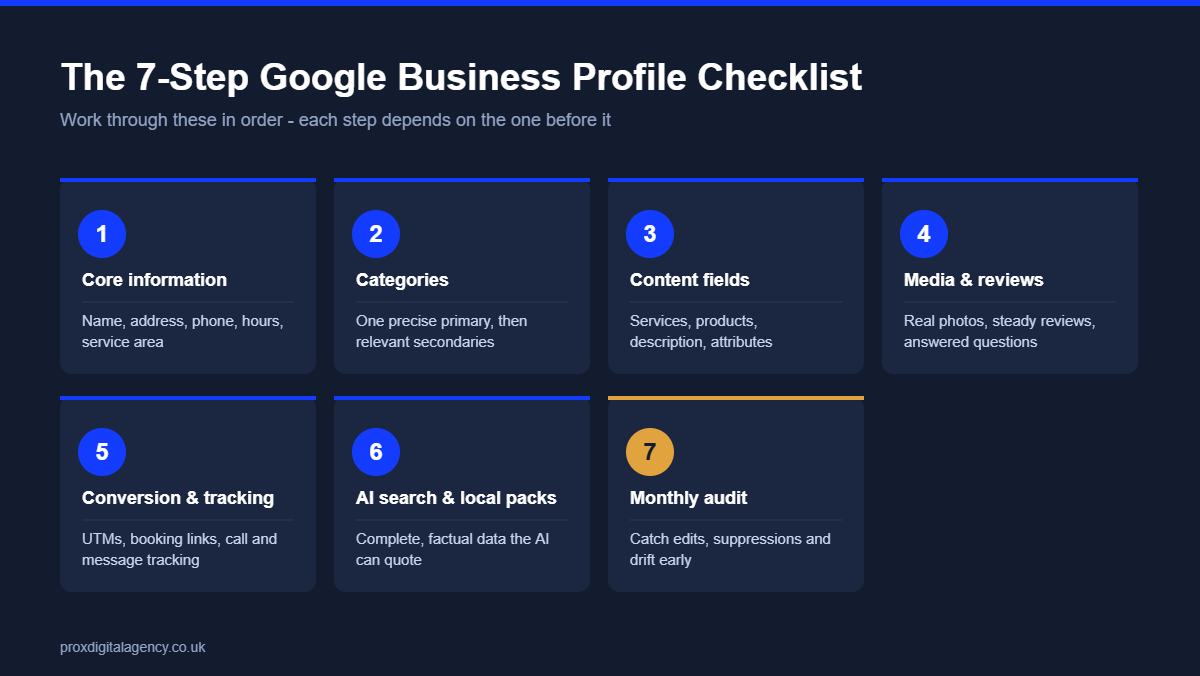
Google ranks local results on three factors, i.e., relevance, distance, and prominence. Your profile controls relevance and prominence directly. A complete profile earns far more calls and direction requests than a bare one. Now the bigger shift in the picture is AI. AI-powered search systems use information from multiple sources to understand and recommend businesses. Your GBP is one important source of business information, so keeping it complete and consistent can improve how search and AI understand your business. Here are the seven quick steps to Google Business Profile optimisation 2026.
Step 1: Set Up Your Core GBP Information Correctly
This is the foundation of any GBP optimisation guide. Get it wrong and every later step suffers. Start with these core details in your Google Business Profile, and make sure the same information is consistent across your website and other online listings.
- Exact business name: Match your real-world signage strictly. No added keywords. No target cities.
- Precise categories: Pick the most specific primary category. Then add up to nine relevant secondary categories.
- Location type: Choose a physical storefront or a hidden service area, based on how customers actually reach you.
- Accurate NAP: Keep your Name, Address, and Phone details identical across your website, directories, and relevant third-party listings.
Step 2: Choose the Right Primary and Secondary Categories
Your primary category is one of the strongest signals for determining which local searches your profile is relevant to.
Be honest while choosing your business category. Do not claim services you do not offer.
Step 3: Fill Every Content Field
Google priortise profiles with no empty fields. This is a core Google Business Profile best practice for 2026.
- Business description: You have 750 characters to write a description. Place your key details in the first 250 characters. Complete profiles give Google more information to understand your business and match it with relevant searches.
- Services and products: List everything you offer, using the words or phrases your customers search with. For example, a Manchester web design agency should write “website design,” not “digital solutions and technology services” in the content field.
- Operational details: Set your working hours, holiday hours, and every applicable attribute. Attributes are the filters Google uses to match searches. Most businesses leave them blank, potentially missing opportunities to appear in relevant searches.
Step 4: Build Trust with Media, Reviews, and Answers
Trust signals separate ranking profiles from converting profiles. Build a profile that gives potential customers clear reasons to trust your business before they decide to contact you.
- Fresh media: Upload two to five real photos every month. Show your team, your premises, and current jobs. Original images beat stock photos every time. Add a short video walkthrough.
- Review management: Reply to every customer review you get. Thank named reviewers. Handle criticism with empathy and a clear resolution path. Review volume and velocity on your GBP influence local rankings.
- Customer Q&A: Google’s public Q&A has largely folded into AI-driven Ask Maps. You cannot seed questions anymore. What you can do is keep your profile data complete and factual, so the AI answers accurately on your behalf.
- Local media mentions: Get your business featured in relevant local publications, industry websites, and community platforms. Earned coverage can strengthen your online authority while giving customers and search engines more trusted sources about your business.
Step 5: Wire Up Conversion and Tracking
Traffic without measurement is guesswork. This step turns your profile into a trackable channel.
- Action links: Add working booking, ordering, or appointment URLs on your business profile. Test them on your mobile first because most local searches happen on mobile phones.
- UTM parameters: Tag your profile website link. This lets you attribute local search traffic correctly in analytics.
- Call tracking: Use a local number as your primary contact. Avoid toll-free and tracking-only numbers, as they can create inconsistent NAP signals.
When you get these details right, that Google Business Profile audit checklist starts to pay off.
Step 6: Optimise for AI Search and Local Packs
This is the newest layer of the local SEO checklist for 2026, and it overlaps heavily with generative engine optimisation. AI Overviews now appear on a large share of local queries. Systems like Gemini, ChatGPT, and Perplexity pull entity data straight from your profile. Three things make you quotable:
- Structured data: Add LocalBusiness schema to your website. It reinforces what your profile already states and helps search engines understand your business details more clearly.
- Entity clarity: Consistent categories, services, and locations help AI connect your business to the right queries.
- Plain and factual copy: Use clear, specific language to describe your services, experience, location, and expertise. Specific details give search engines and AI systems useful information to understand and cite, while vague marketing claims add little value.
- Authority signals: Earn relevant mentions and links from trusted local publications, industry websites, and business directories. These third-party signals can reinforce your business’s credibility beyond your own website and GBP.
Your website should not rely on its own content alone. Relevant backlinks and digital PR coverage from trusted third-party websites can strengthen the wider authority signals surrounding your business. For any small business Google Business Profile, this is now non-negotiable. You are not just ranking. You are training the AI answer.
Step 7: Run a Monthly Profile Audit
Optimisation is not a one-off task. Set a recurring date and spend 30 minutes re-optimising what has changed and what needs attention.
- Performance data: Compare calls, direction requests, website clicks, and search queries with the previous month. Use changes to identify issues with your hours, services, or website.
- Details check: Verify your opening hours, phone number, website link, booking URLs, and holiday hours, especially after seasonal changes.
- Unauthorised edits: Check your profile regularly for changes to your business name, hours, categories, or other details suggested by users.
- Fresh visuals: Add two to five new photos if you have not uploaded any this month.
- AI visibility: Search your main service and town to see how your business appears in AI-powered results. Keep your service descriptions and website information clear and up to date.
Log your changes and results each month. Over time, this gives you evidence for what is working and what needs adjusting.
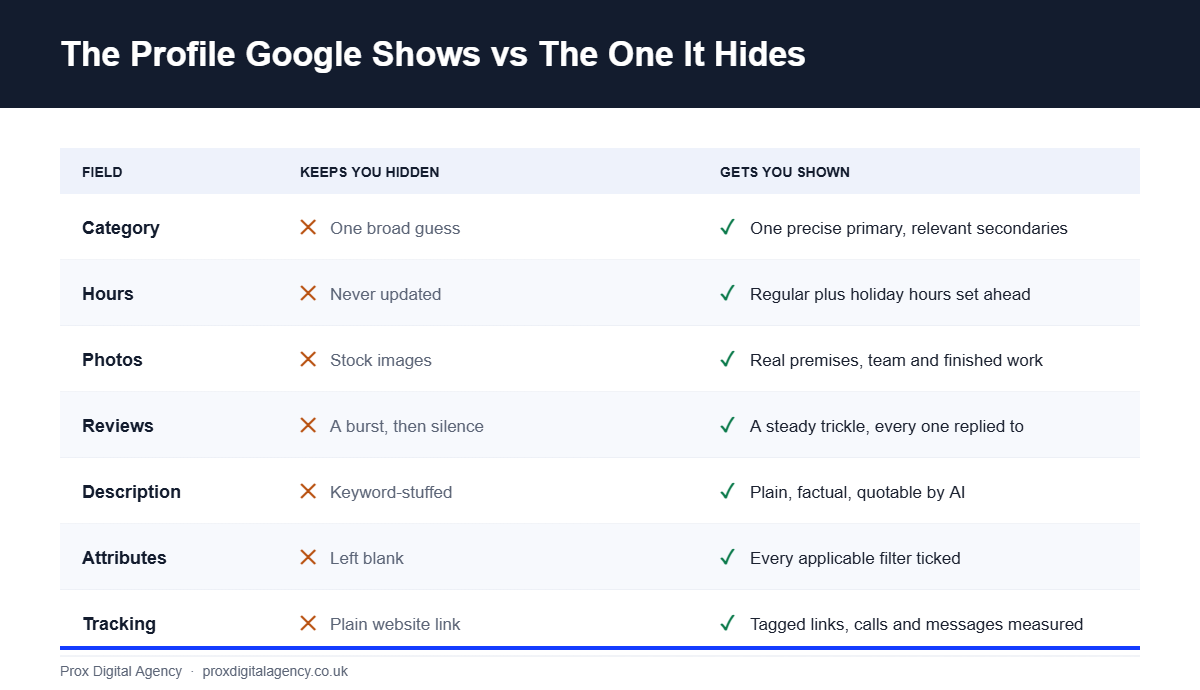
5 Common Google Business Profile Mistakes to Avoid in 2026
Before you finish your Google Business Profile optimisation, check that you are not making these 5 common mistakes that can limit your local visibility.
Let Prox Help You Optimise Your Google Business Profile
Executing all seven steps consistently is straightforward. Keeping your profile accurate, active, and optimised month after month is where things get harder. From category research and content updates to reviews, tracking, and AI readiness, it takes consistent attention. Prox Digital Agency helps local businesses improve their search visibility through SEO, digital PR, and link building outreach. We combine GBP optimisation with content, earned media coverage, and relevant backlinks to build stronger local authority and generate more enquiries. Visit proxdigitalagency.co.uk to book a free profile audit today. We will show you what is missing, what needs improving, and where your profile may be losing local visibility. If you are budgeting for this work, our guide to local SEO pricing breaks down what it typically costs.
Prox Digital Agency
Want to know what your profile is missing?
Send us your business name and we will audit your Google Business Profile against all seven steps, free. You get a plain list of what is missing and what to fix first.
Frequently Asked Questions
Q1: What is the most important ranking factor for Google Business Profile in 2026?
Your primary category is one of the most important factors in determining which local searches your profile is relevant to.
Q2: How important is Google Business Profile for local SEO?
A well-optimised profile helps your business appear in Google Maps and local search results while giving potential customers key information before they visit your website.
Q3: Can digital PR improve local SEO?
Yes. Relevant digital PR can earn mentions and backlinks from trusted publications and industry websites, strengthening your business’s wider online authority.
Q4: How does link building outreach support local businesses?
Link building outreach helps local businesses earn relevant links and mentions from authoritative third-party websites, which can support organic search visibility and credibility.
Q5: How does SEO PR help a local business?
SEO PR combines digital PR and SEO to earn relevant media coverage, brand mentions, and backlinks that can strengthen online authority and search visibility.


 Maryam Basit, London
  9 mins
Digital PR for SEO: How to Earn Links Journalists Actually Want

E-E-A-T in 2026: How to Prove Experience, Expertise, Authority and Trust
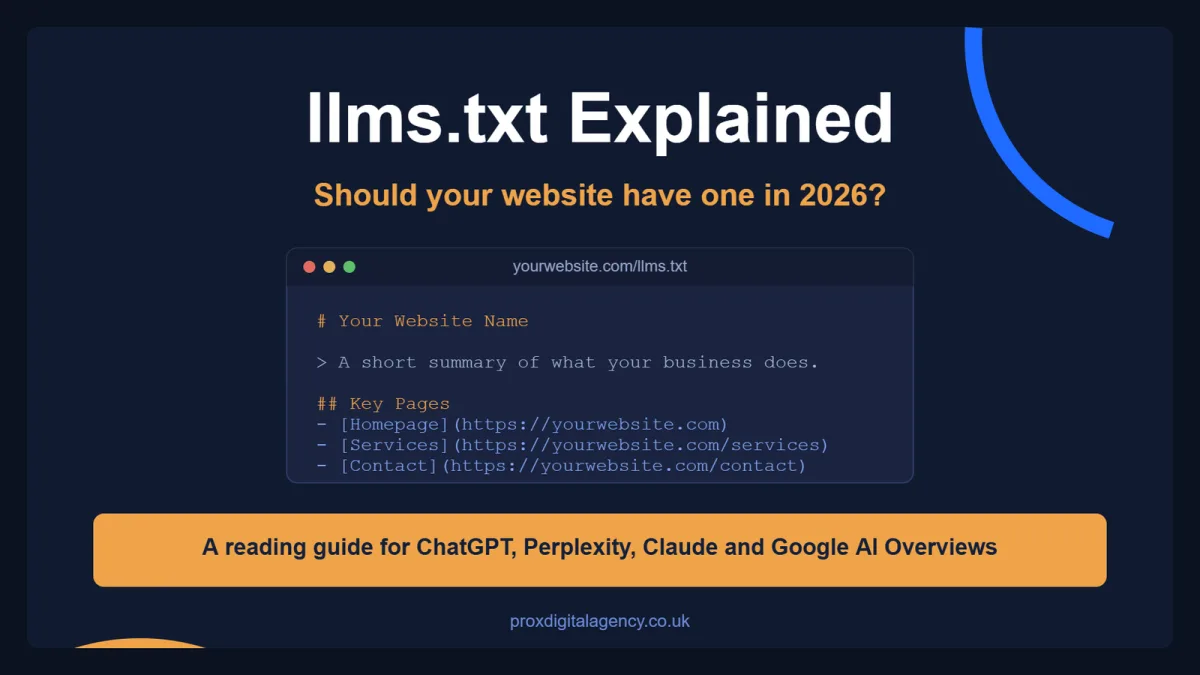
llms.txt Explained: Should Your Website Have One in 2026?
Perplexity Optimisation: How to Become a Cited Source
Prox Digital Agency Expands Its Generative Engine Optimisation Practice for Global Businesses
How to Choose a Professional SEO Company: 10 Questions to Ask
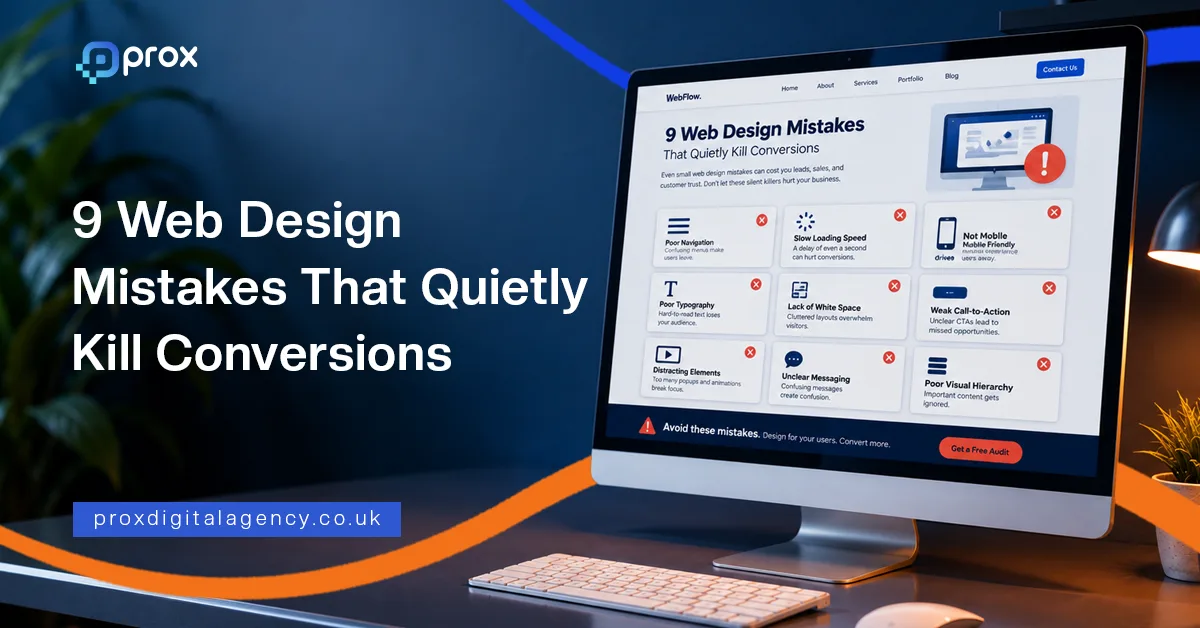
9 Web Design Mistakes That Quietly Kill Conversions

Prox Digital Agency CEO Ali Zafar Azad Discusses Digital Transformation on Xraised