How to Get More Google Reviews (and Handle Negative Ones) Without Hurting Your Rankings
Google reviews can influence both your local search visibility and a customer’s decision to contact your business. But how do you encourage more reviews without violating Google’s policies?
The answer is to make it easy for customers to share honest feedback. Ask at the right time, provide a direct review link, and respond professionally to both positive and negative experiences.
Google considers review quantity and positive ratings as part of local rankings, but more reviews don’t automatically mean higher positions.
This guide covers how to get more Google reviews, handle negative feedback, and manage reviews without putting your business profile at risk.
Why Do Google Reviews Matter for Local SEO?
Google reviews help customers evaluate businesses before making a purchase, booking an appointment, or requesting a service.
They appear alongside eligible business listings on Google Search and Google Maps, providing information about previous customer experiences. Accurate business listings matter too, so see our guide to local citations and NAP consistency.
For example, someone searching for a dental practice in Birmingham may compare several businesses based on their locations, services, ratings, and written reviews.
Reviews can influence which business a customer chooses to contact.
How Google Reviews Affect Local Search Rankings
Google identifies three main factors that influence local search rankings: relevance, distance, and prominence.
Reviews are associated with prominence, which considers how well-known a business is.
According to Google’s published guidance, the number of reviews and positive ratings can help a business’s local ranking.
However, Google doesn’t disclose the exact importance of reviews compared with other ranking factors.
This means a business with more five-star reviews won’t necessarily outrank a closer or more relevant competitor.
Reviews should be considered part of a wider local SEO strategy rather than an independent ranking solution.
For a detailed explanation of these factors, read our complete guide to local SEO.
How Reviews Influence Customer Decisions
Beyond rankings, reviews allow customers to understand what other people experienced.
A restaurant customer might read comments about food quality, service, and waiting times. Someone looking for an electrician may be interested in reliability, communication, and the standard of completed work.
Detailed feedback can help customers determine whether a business meets their expectations.
Businesses that respond professionally also provide useful context about how they handle customer questions and concerns.
How to Get More Google Reviews: 7 Practical Methods
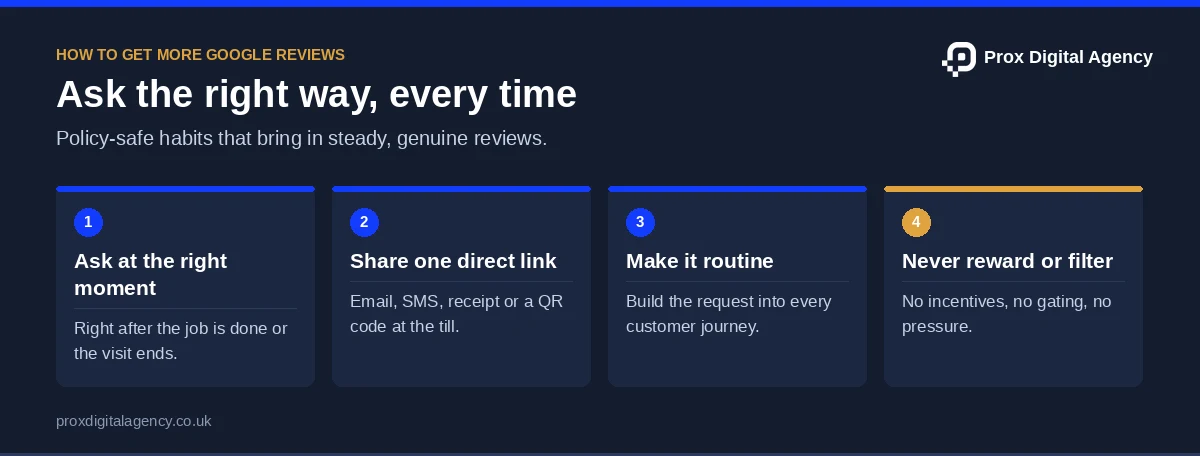
Getting more Google reviews starts with making honest feedback a natural part of the customer experience. Focus on asking at the right time, simplifying the review process and maintaining consistent communication without incentives or pressure.
1. Ask Customers After Completing a Service
A completed purchase, appointment or service is a suitable time to request feedback. For example, a plumber might ask after finishing a repair, while a salon could invite customers to review their appointment.
Keep the request polite and optional: “Thank you for choosing us. If you’d like to share your experience, we’d appreciate your feedback on Google.” Avoid requesting specific ratings or keywords.
2. Share a Direct Google Review Link
A direct review link makes it easier for customers to leave feedback without searching for your business. Open your Google Business Profile, select Read reviews → Get more reviews, and copy the link.
Share it through appropriate channels, such as follow-up emails or customer messages. Always test the link to ensure it opens the correct business profile. Google’s own tips to get more reviews walk through the same steps.
3. Use a Google Review QR Code
A QR code allows customers to access your review page by scanning it with their phone. Businesses with physical premises can display these codes on receipts, checkout counters or thank-you cards.
For example, a café might place a QR code near its payment counter with a simple invitation to share feedback. Keep participation voluntary and never offer discounts or rewards for reviews.
4. Include Review Requests in Follow-Up Emails
Adding a review invitation to existing follow-up emails can help collect feedback without creating a separate campaign.
For example: “Thank you for using our services. If you’d like to share your experience, you can leave a Google review here: [Review link].” Keep messages relevant, respect communication preferences, and avoid repeated requests.
5. Add Review Requests to Your Customer Journey
Include review requests at natural points in your customer process, such as after an appointment, vehicle collection, or a completed project. This makes feedback collection part of your existing workflow.
Choose a moment when customers have had enough time to evaluate the service. Avoid asking them to submit reviews while employees watch or before the work is completed.
6. Train Staff to Request Feedback Appropriately
Customer-facing employees should understand how to request reviews politely without influencing customer opinions. Provide a consistent approach, such as directing customers to the review link on their receipt.
Avoid setting targets that encourage staff to pressure customers or request only positive feedback. The aim is to encourage genuine reviews from customers with different experiences.
7. Maintain a Consistent Review Request Process
A repeatable process is more manageable than occasional review campaigns. For example, include a review link in completion emails, monitor new feedback weekly, and respond professionally.
Focus on providing customers with regular opportunities to share honest experiences rather than achieving a fixed review count.
For a broader approach, follow our 90-day local SEO plan for small businesses.
Review Velocity: Should You Get More Google Reviews Every Month?
Review velocity refers to the rate at which a business receives new reviews over time.
For example, a business receiving ten reviews in one month has a different review velocity from one receiving ten reviews across an entire year.
SEO professionals sometimes examine review velocity when assessing a business’s reputation and local search performance.
However, Google doesn’t publish a specific review velocity threshold or confirm that receiving a fixed number of reviews each month will improve rankings.
That distinction matters.
A business shouldn’t assume that doubling its monthly review count will produce a corresponding ranking increase.
Does Getting Reviews Regularly Help?
Receiving genuine feedback over time can help customers understand a business’s recent performance.
For example, a prospective customer may find recent reviews useful when evaluating whether a restaurant’s service or menu has changed.
Regular feedback also gives business owners an opportunity to identify recurring complaints and positive customer experiences.
However, there is no universal number of reviews that every business should aim to collect each month.
A small independent shop and a busy multi-location restaurant chain have very different customer volumes.
Your approach should reflect genuine customer activity rather than an artificial review target.
Can a Sudden Increase in Reviews Cause Problems?
A sudden increase in reviews isn’t automatically a policy violation.
A business may receive additional feedback after a busy trading period or an appropriate customer communication campaign.
However, Google prohibits fake engagement and attempts to manipulate ratings.
Suspicious patterns associated with fake or coordinated reviews may be detected and acted upon.
The safest approach is to request authentic, unbiased feedback and avoid trying to manufacture review activity.
Want a review process that runs itself?
We will set up your review link, QR code and follow-up message, and show your team how to ask without breaking any rules, free.
How to Respond to Positive Google Reviews
Responding to positive reviews is an opportunity to acknowledge customer feedback and maintain a professional relationship.
Google allows verified businesses to reply publicly to reviews.
A useful response should be brief, relevant, and personal where appropriate.
For example:
Customer Review:
“Really pleased with the service. The team arrived on time and explained everything clearly.”
Business Response:
“Thank you for your feedback. We’re pleased you found the service clear and helpful, and we appreciate you taking the time to share your experience.”
Avoid copying the same generic response under every review.
You also don’t need to insert service keywords or location names artificially.
Review replies should primarily serve the customer and anyone reading the conversation.
How to Respond to Negative Google Reviews Professionally
Negative reviews are a normal part of operating a business.
Customers may have concerns about service quality, waiting times, communication, or expectations.
A negative review doesn’t automatically mean that your local rankings will fall.
The more immediate consideration is how you respond to the feedback and whether the underlying issue requires attention.
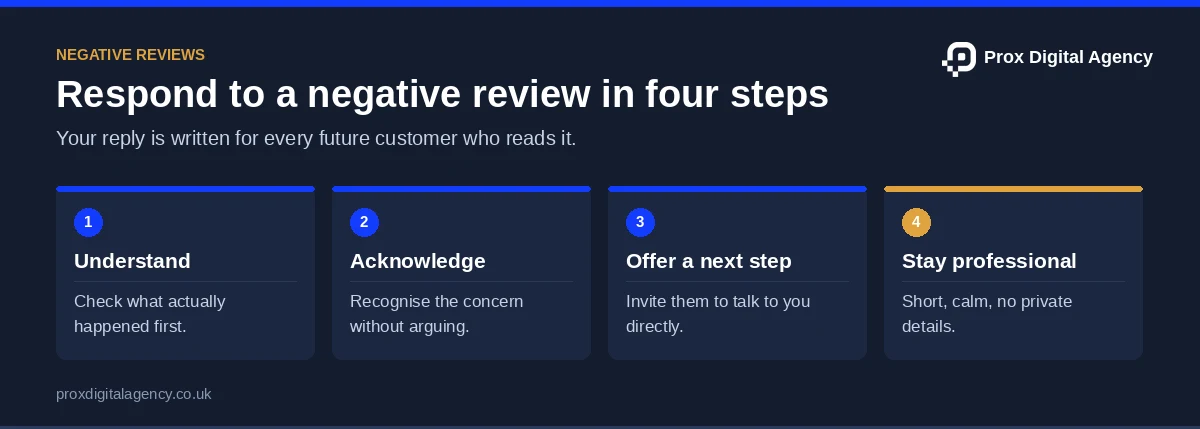
Step 1: Understand the Complaint Before Responding
Read the review carefully and establish what happened.
If the reviewer mentions a delayed appointment, check the relevant records before replying.
Avoid responding while frustrated or making assumptions about the customer’s experience.
A factual understanding helps you provide a more appropriate response.
Step 2: Acknowledge the Customer’s Concern
Begin by recognising the issue raised.
You don’t need to agree with every claim, but you should avoid dismissing the customer’s experience.
For example:
“Thank you for sharing your feedback. We’re sorry to hear that your appointment did not meet your expectations.”
This acknowledges the concern without making unverified statements.
Step 3: Explain the Next Step
Where appropriate, offer a practical route towards resolution.
For example:
“We’d appreciate the opportunity to understand what happened. Please contact our team directly so we can review the matter.”
Avoid publicly requesting sensitive information such as medical details, personal account numbers, or private correspondence.
Step 4: Keep Your Response Professional
Your reply is visible to other potential customers.
Arguments, personal criticism, or defensive language can distract from the issue being discussed. Our step-by-step local SEO audit guide shows how to spot issues like this across your profile, listings and website.
Keep responses concise and focused on resolving the concern.
Example: Responding to a Negative Google Review
Customer Review:
“I booked an appointment but had to wait much longer than expected. Communication could have been better.”
Suggested Response:
“Thank you for your feedback. We’re sorry about the delay and the lack of clear communication during your visit. We understand how important it is to keep customers informed and will review this with our team. Please contact us directly if you’d like to discuss your experience further.”
This response acknowledges the problem, avoids confrontation, and provides a clear next step.
Not every complaint can be resolved publicly. Some situations require private communication and appropriate internal follow-up.
Should You Remove Negative Google Reviews?
Businesses cannot remove genuine negative Google reviews simply because they disagree with them.
Google generally removes reviews only when they violate its content policies.
Examples of potentially reportable content include spam, fake engagement, certain forms of harassment, and other prohibited material.
A negative opinion about service quality isn’t automatically a policy violation.
How to Report an Inappropriate Review
If you believe a review violates Google’s policies:
- Open your Google Business Profile.
- Select Read reviews.
- Find the review you want to report.
- Choose the option to report it.
- Select the relevant reason and submit the report.
Google evaluates the report and determines whether the content should be removed.
If the review doesn’t violate its policies, it may remain published.
Don’t repeatedly report genuine criticism simply because it’s unfavourable.
For legitimate complaints, a constructive response is usually more appropriate than attempting removal.
Ways to Get More Google Reviews That Put Your Business at Risk
Google has policies designed to prevent fake engagement and rating manipulation.
Businesses should understand these rules before launching any review collection campaign.
Buying Fake Google Reviews
Purchasing reviews from people who haven’t genuinely experienced your business violates Google’s policies.
Fake reviews can be removed, and policy violations may lead to restrictions on a business profile.
Offering Rewards for Reviews
Google’s policy on fake engagement prohibits incentives such as discounts, payments, free products or services in exchange for reviews.
This applies even when businesses don’t explicitly demand a five-star rating.
Requests should always be voluntary and unbiased.
Review Gating
Review gating involves selectively directing satisfied customers towards public reviews while discouraging dissatisfied customers from leaving them.
For example, asking customers to rate their experience privately and sharing the Google review link only with those who provide positive feedback creates a biased process.
Google’s policies prohibit selective solicitation intended to manipulate ratings.
Pressuring Customers to Leave Reviews
Customers should be free to decide whether to leave feedback and what to say.
Avoid asking customers to show staff their review before leaving the premises or encouraging them to include specific wording.
A genuine review collection process should respect the customer’s independence.
UK Law Now Bans Fake Reviews Too
Since 6 April 2025, the Digital Markets, Competition and Consumers Act 2024 has made it unlawful in the UK to write, commission or publish fake reviews, or to publish incentivised reviews without making the incentive clear. Hiding negative reviews in a misleading way is also banned.
The Competition and Markets Authority can fine businesses up to 10% of their global turnover for breaches. Its fake reviews guidance (CMA208) explains what businesses that collect or display reviews need to do.
In practice, the law points to the same habits as Google’s policies: ask every customer, never reward people for Google reviews, and never filter out unhappy customers.
How to Keep Managing Google Reviews as You Get More of Them
Review management becomes easier when responsibilities and processes are clearly defined.
Businesses should establish a manageable routine for monitoring feedback, responding to customers, and identifying service issues.
Create a Simple Review Management Routine
A small business might use the following schedule:
The frequency should reflect your business size and customer activity.
A busy restaurant may need daily review monitoring, while a small consultancy might receive feedback less frequently.
Look for Patterns in Customer Feedback
Individual reviews are useful, but recurring themes can reveal operational issues.
For example, several customers mentioning delayed responses may indicate a communication problem.
Repeated positive feedback about staff helpfulness can identify an area of strength.
Review management should therefore support business improvement, not just online reputation.
Monitor Reviews Alongside Other Local SEO Metrics
Reviews are one part of local search performance.
Businesses should also consider relevant search visibility, website engagement, enquiries and customer actions.
A higher review count doesn’t necessarily mean more qualified enquiries.
The objective is to understand whether your wider online presence helps customers find and choose your business. If you want help connecting reviews to rankings and enquiries, our local SEO experts can build the process with you.
For more information about keeping your profile accurate and useful, use our Google Business Profile optimisation checklist.
Frequently Asked Questions About Google Reviews
How Can I Get More Google Reviews Quickly?
The most practical starting point is to make your review link available to customers who have genuinely experienced your business.
Include it in suitable follow-up communications, receipts, or QR codes.
Avoid incentives, fake reviews, and pressure. There is no guaranteed method for collecting a particular number of genuine reviews within a fixed timeframe.
Do Google Reviews Help Local SEO Rankings?
Yes. Google confirms that review quantity and positive ratings can contribute to local prominence.
However, reviews are not the only ranking factor, and Google doesn’t publish the exact weight assigned to them.
Does Responding to Negative Reviews Improve Rankings?
Google encourages businesses to respond to reviews, but it does not publicly guarantee a ranking improvement from replying to negative feedback.
Responses are primarily valuable for customer communication, reputation management and demonstrating how the business handles concerns.
Can One Bad Review Hurt My Business?
One negative review doesn’t automatically damage a business’s rankings.
However, it may influence how some prospective customers perceive the business, particularly when there are few other reviews.
A professional response and appropriate follow-up can provide useful context.
How Often Should I Ask Customers for Reviews?
Ask at an appropriate point after a genuine customer experience.
There is no universal weekly or monthly review request target.
Focus on maintaining a fair, consistent process rather than reaching a particular review count.
Conclusion: Build a Review Process Customers Can Trust
Google reviews are most valuable when they reflect real customer experiences and help people make informed decisions about a business.
A reliable review process should make sharing feedback easy, give customers the freedom to express their views, and ensure concerns receive appropriate attention.
Rather than focusing exclusively on ratings or review counts, businesses should use customer feedback to strengthen service quality and maintain trust.
The aim is to build an authentic reputation that supports both customer confidence and long-term local visibility.
Prox Digital Agency · Local SEO
Reviews are only one part of ranking in Google Maps
Our local SEO team combines review management with profile optimisation, local content and citations to grow your enquiries.

 Muhammad Bilal, London
 13 mins
Local SEO for Law Firms: How UK Solicitors Can Win More Local Enquiries
Local SEO for Dentists and Private Clinics: How to Win Patients Searching Nearby
Local SEO Audit: How to Find What Is Holding Back Your Map Pack Rankings

Local Link Building: 12 Ways to Earn Links From Your Community, Press and Partners
Beyond Google: How to Set Up Apple Business Connect and Bing Places for Local Visibility
Local SEO for Service-Area Businesses: How to Rank Without a Shop or Office

The Complete Guide to Hiring a Web Development Agency in the UK (2027)
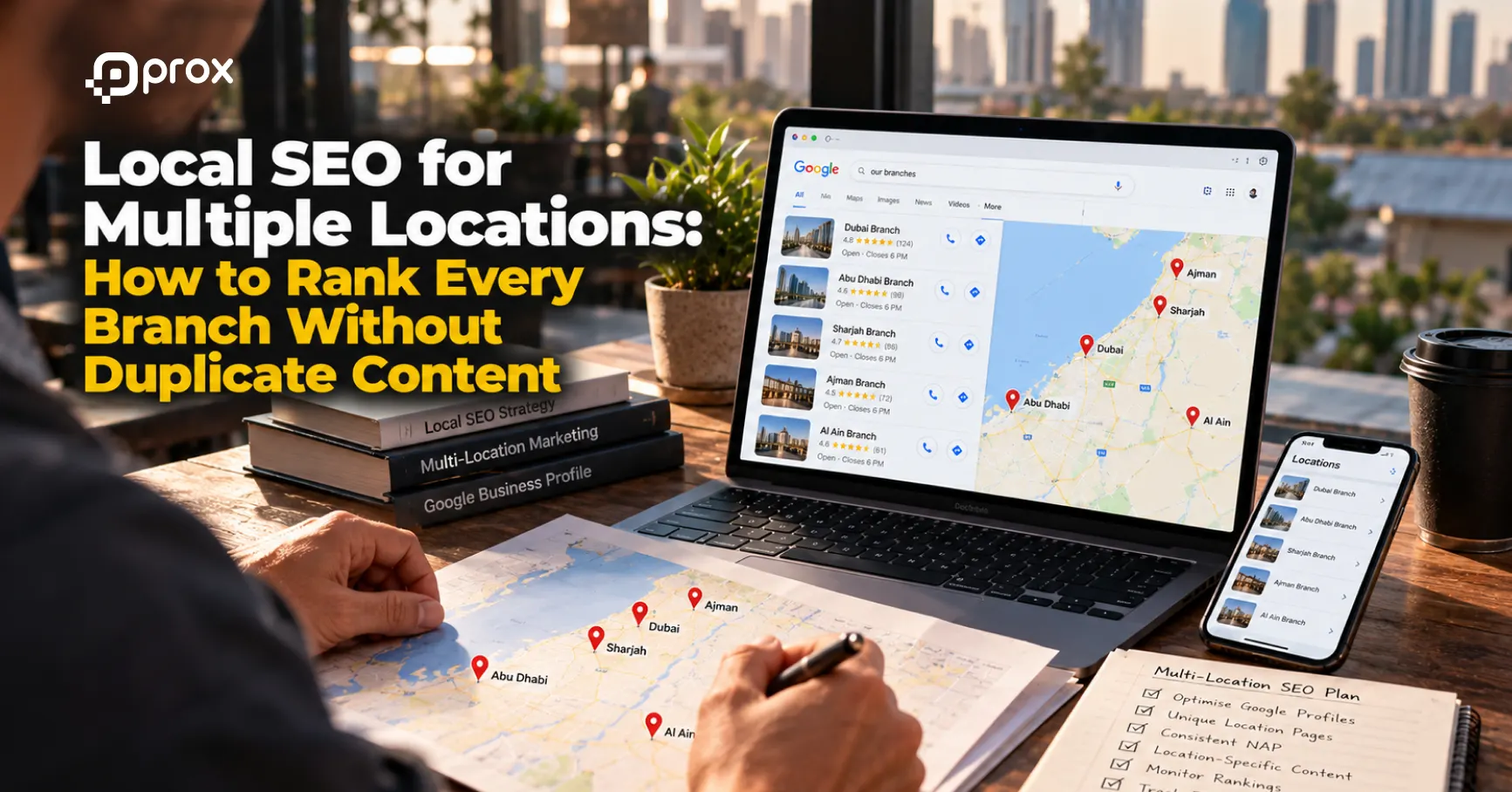
Local SEO for Multiple Locations: How to Rank Every Branch Without Duplicate Content