E-E-A-T in 2026: How to Prove Experience, Expertise, Authority and Trust
Suppose you run a business and your website is packed with content. You have blog posts, service pages and guides covering everything your customers might search for. Your traffic is growing, but the leads are not.
So what is missing?
In many cases, the problem is not simply how much content you published, but how credible it appears to search engines and visitors.
This is where Google’s conceptual framework E-E-A-T comes in.
E-E-A-T stands for Experience, Expertise, Authoritativeness and Trustworthiness. It helps assess the experience and expertise behind your content, your business’s recognition in its industry, and the trust people place in the information you provide.
In 2026, that distinction matters more than ever. With businesses competing for visibility across traditional search and AI-powered discovery, publishing more content is not necessarily enough. You need to give people and search systems clear evidence that your business knows what it is talking about.
So, how do you actually prove E-E-A-T through your website?
What E-E-A-T Actually Means for Search Visibility in 2026?
A framework outlined in Google’s Search Quality Rater Guidelines, E-E-A-T refers to Experience, Expertise, Authoritativeness, and Trustworthiness. Unlike page speed, it’s not a direct ranking factor. Instead, it provides a framework for understanding the qualities that can help demonstrate content credibility and reliability.
For years, many businesses regarded E-E-A-T as a secondary concern. That practice is not sustainable anymore. In 2026, when AI-generated content becomes easier to produce in large volumes, identifying genuine and reliable sourcing has become increasingly important, such as: ‘Who wrote this?’ “Is the content authoritative?’ or “Can you verify what’s written?’
This credibility builds trust, which is central to E-E-A-T and increasingly important when competing for search visibility.
The Four E-E-A-T Signals Your Website Needs to Demonstrate
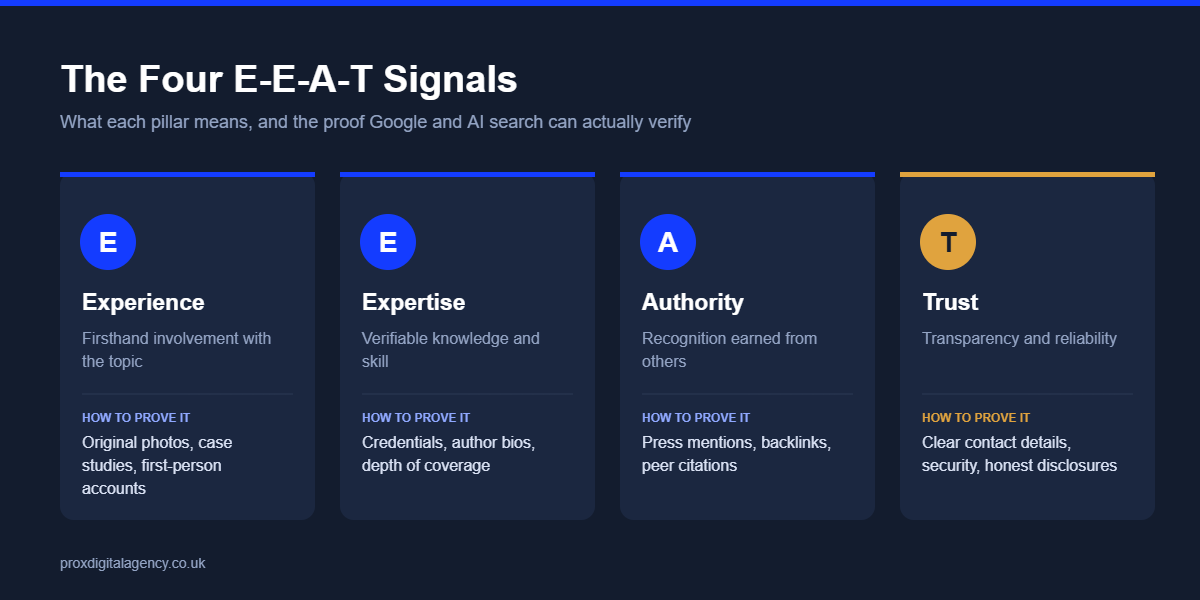
Here’s a table showing what each pillar means and how you can use it to prove your brand’s E-E-A-T.
Each pillar supports the next one. A well-written bio cannot hide a lack of genuine experience. Similarly, brand trust cannot be built without establishing brand authority. Let’s understand all four pillars one by one.
1. Experience: Show What You Have Actually Done
Initially it was E-A-T, now it’s E-E-A-T. The additional ‘Experience’ layer is the newest addition yet hardest to fake. Google wants to evaluate that you have actually done what you’re claiming.
Here is how businesses can show it:
- Show your business proof. Use raw photos, unedited original videos, or screenshots from real projects.
- Write in first person. “We tested this on 12 client projects” is stronger than “businesses should consider our brand.”
- Publish case studies. If you are still weighing the two disciplines, our SEO vs GEO guide explains where each one applies. Document real results, including what did not work. A failed campaign with lessons learned is still proof of experience.
- Add behind-the-scenes detail. Specific numbers, timelines, and decisions show you were there.
- Experienced content reads like a report. This matters both to readers and algorithms.
2. Expertise: Make Knowledge Verifiable
Your expertise is your knowledge that can be verified by Google as well as potential customers. Google’s raters look for author information that connects a real person to a real qualification.
Focus on three areas:
- Author credentials. Add proper bios. Mention certifications, degrees, and your experience years in the field. If your team has any specialised certification, mention that too.
- Topical depth. Cover one niche thoroughly instead of publishing thin blog posts across multiple unrelated topics.
- Primary sources. Google’s algorithm prioritises authentic sources, such as linking your content to ONS data, gov.uk guidance, FCA publications, or peer-reviewed studies.
One practical step: create individual author pages. Link every blog post to its writer. This alone lifts expertise signals for most sites.
Another practical step is to create individual author pages and link blog posts that are written by its writer.
3. Authority: Earned Recognition, Not Self-Declared
Authority is what other people say about your brand’s existence. That is something you earn through recognition, and it can’t be claimed in a tagline.
How can you build authority? Here are four ways to earn it.
- Earn external mentions. Get cited in industry publications, trade bodies, and reputable news sites. A quote in a trade magazine carries more weight than ten self-written posts.
- Keep your digital visibility consistent. Your company name, address, and description should match across your website, LinkedIn, Companies House, and directories.
- Build industry recognition. Interviews, podcast appearances, and expert roundups all count. If other recognised experts reference you, algorithms will notice.
- Build genuine backlinks. Earning mentions in communities and expert roundups helps here, which is why platforms like Reddit now influence AI visibility. Links from people who actually rate your work. Avoid bought links.
Building authority takes time, and it is one of the strongest Google quality signals you can earn through your genuine appearance and consistency.
4. Trust: The Signals That Make a Business Easier to Verify
Trust forms the foundation of E-E-A-T, supporting the credibility of experience, expertise and authority. Without it, the other three pillars lose their value. For any business, this means demonstrating clear, verifiable signals that reinforce reliability and transparency.
Legal and regulatory transparency
- Your data protection registration number (ICO in the UK, your national DPA in the EU, or the local equivalent), especially if your business handles personal data.
- A GDPR-compliant privacy policy (UK GDPR, EU GDPR or your local equivalent) that is in plain English and readable.
- Companies House registration details on your business website.
- FCA or SRA registration numbers if you work in finance or law.
Site-level trust
- HTTPS across every page.
- A genuine “About Us” page with your original names and identification like pictures.
- A working “Contact Us” page with a physical, approachable address.
- Clear ownership of the content published on your site.
Content-level trust
- Disclose your affiliate links and sponsorships on your web pages.
- Be clear about limitations. If you only tested a product for a week, say exactly that.
- Show reviews and feedback channels that are genuinely open.
It may seem like a lot to put in place, but most of these trust signals only need to be set up once and kept up to date over time.
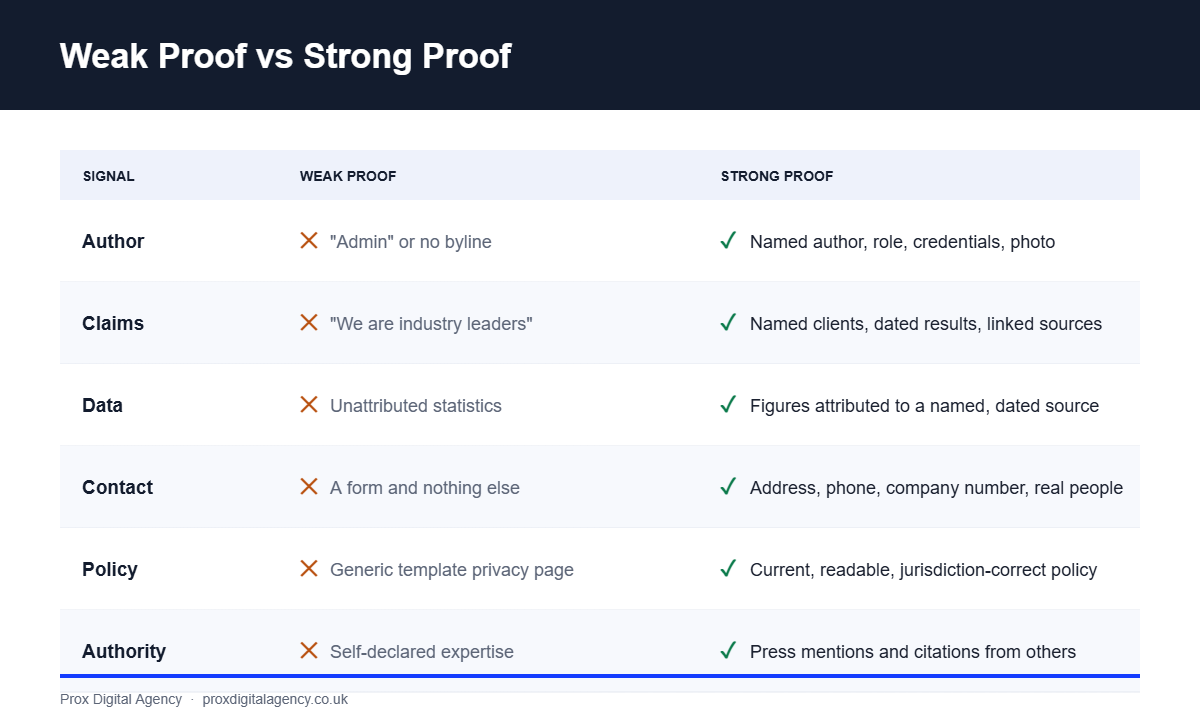
Can Your Website Prove Its E-E-A-T?
Your website should show your audience and Google’s algorithms that your content demonstrates strong E-E-A-T.
Run through this checklist every quarter:
If you tick most of these, you are already ahead of your competitors.
Why E-E-A-T Matters for AI Search and Digital PR
This is where E-E-A-T pays off in 2026. Google’s AI Overviews and tools like ChatGPT or Perplexity pull from sources they trust. They cite content with clear attribution and verifiable claims.
To improve your chances of being cited:
- Answer questions directly in the first sentence of a section.
- Use clear headings that match how people search.
- Attribute quotes and data to named sources.
- Keep author information visible on the page.
This is often called AEO or GEO (generative engine optimisation). Both can build on a strong E-E-A-T foundation by making credible information easier for search engines and AI systems to understand and potentially cite. However, good formatting alone cannot compensate for content that lacks genuine expertise, reliable sources or clear evidence.
Proving E-E-A-T in 2026
E-E-A-T is neither a new concept nor an outdated one. It continues to evolve alongside Google’s approach to content quality, making it increasingly important for content marketing and website branding. This guide shows how to prove your experience, expertise, authority, and trust through your content and strengthen your digital visibility across search, AI platforms, and your audience.
At Prox Digital Agency, we connect SEO, GEO, and PR under one roof. That matters because E-E-A-T touches all three. We work with brands worldwide to build the proof that supports their credibility, whether through better content, clear author frameworks, or digital PR that earns real recognition and citations.
Ready to strengthen your E-E-A-T? Book a free strategy call with our team today to build the experience, expertise, authority, and trust your website needs to compete in search.
Prox Digital Agency
Not sure your site can prove any of this?
We audit your authority signals, fix what is missing and build the proof that Google and AI search can actually verify. Free, no obligation.
FAQs
Why EEAT matters for SEO?
While E-E-A-T is not a direct ranking factor, it still matters for SEO because it shapes how Google assesses credibility through experience, expertise, authority, and trustworthiness signals. Strong E-E-A-T leads to better rankings, greater user trust, and higher engagement.
Why is E-E-A-T important for businesses in 2026?
Google now applies E-E-A-T scrutiny to all content categories. As AI-generated content becomes more common, showing real experience and expertise can help businesses stand out in organic search.
Does Google give your website an E-E-A-T score?
No. Google does not give websites or pages a single E-E-A-T score. Google explicitly states that E-E-A-T itself is not a specific ranking factor. It is a framework for understanding the experience, expertise, authoritativeness, and trustworthiness demonstrated by your content and its creator.
Is E-E-A-T important for every site?
Yes. E-E-A-T applies to all websites, but what matters most depends on the topic. A health or finance site may need stronger evidence of expertise and trust, while a cooking blog can demonstrate experience through first-hand recipes, testing and practical knowledge.
How does E-E-A-T affect citation in Google AI Overviews?
E-E-A-T is a primary factor Google uses to select sources for AI Overviews and other generative answers. Content with clear author attribution, verifiable credentials, and citations from recognised institutions is more likely to be referenced in AI-generated results.

 Maryam Basit, London
  9 mins
Digital PR for SEO: How to Earn Links Journalists Actually Want
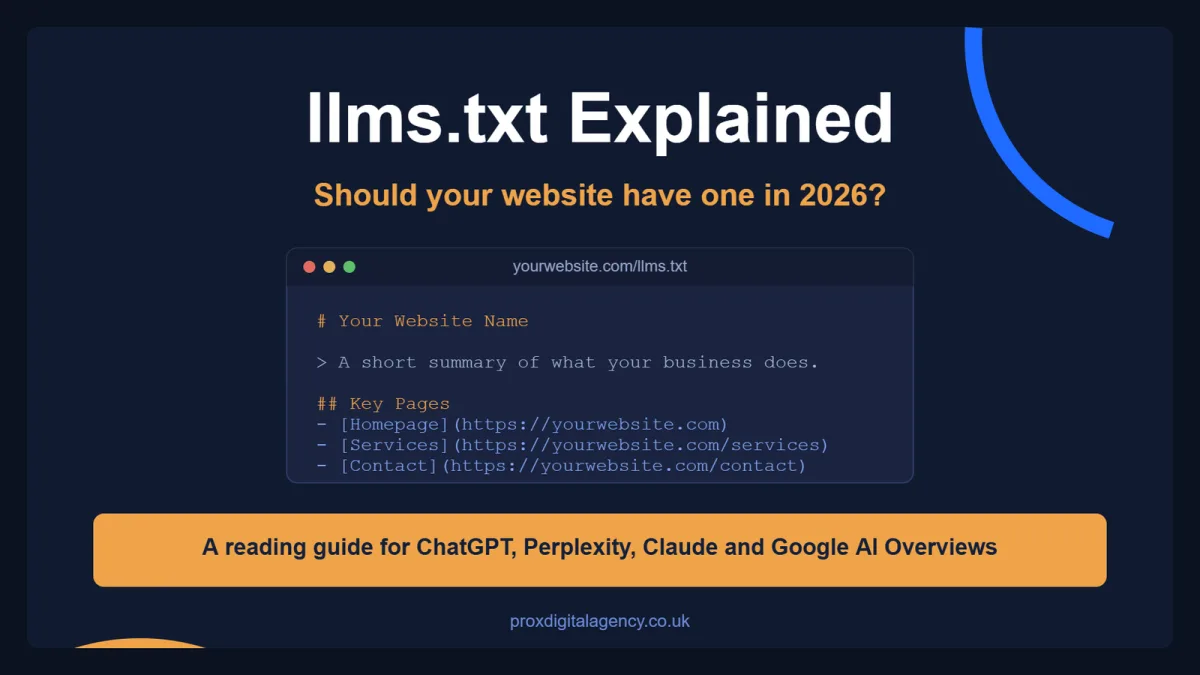
llms.txt Explained: Should Your Website Have One in 2026?

Perplexity Optimisation: How to Become a Cited Source

Prox Digital Agency Expands Its Generative Engine Optimisation Practice for Global Businesses
How to Choose a Professional SEO Company: 10 Questions to Ask

9 Web Design Mistakes That Quietly Kill Conversions
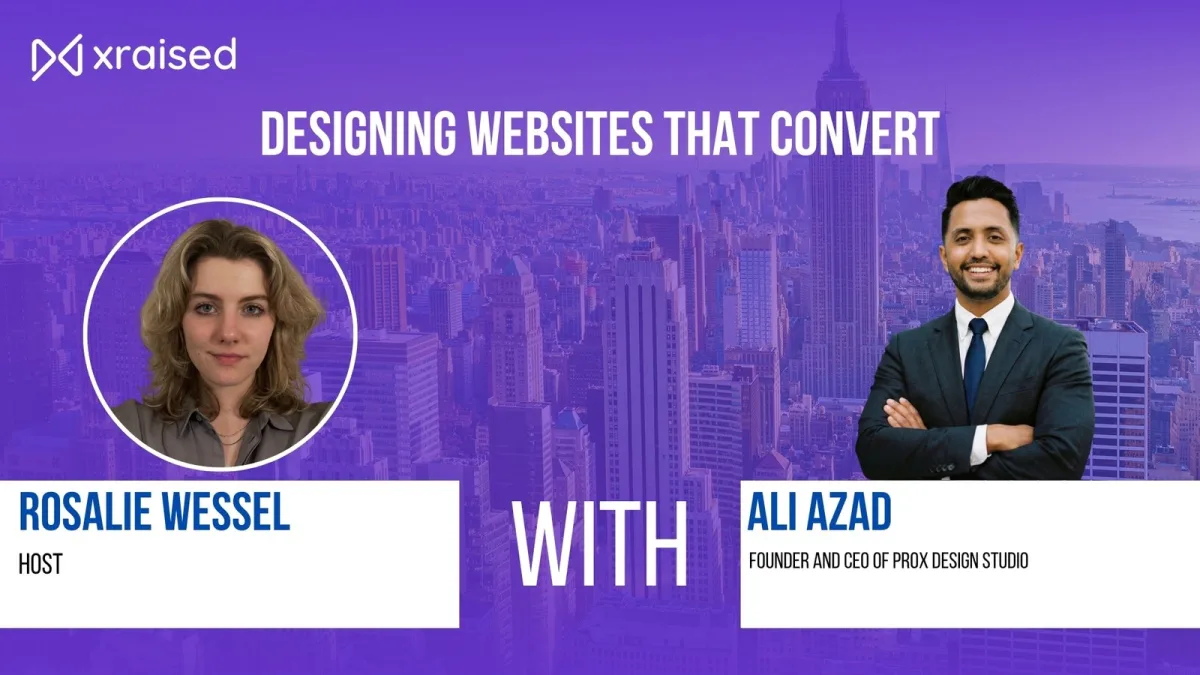
Prox Digital Agency CEO Ali Zafar Azad Discusses Digital Transformation on Xraised
What Does an SEO Agency Actually Do? (2026)