Keyword Research for PPC: How to Find Google Ads Keywords That Convert
Good keyword research for PPC is not about finding the Google Ads keywords with the most searches. Instead, it is about finding the keywords that bring a positive return on your spend. In other words, you look for high-intent searches that lead to clicks and conversions.
First, brainstorm seed keywords from your products or services. Then research competitor keywords, check search intent, group related terms and block irrelevant searches with negative keywords. Strong research helps UK businesses reach people who are ready to buy, whereas weak research wastes budget on clicks that never convert.
This guide explains how to find, choose, organise and refine keywords for Google Ads.
What Is Keyword Research for PPC?
In short, keyword research for PPC is the process of finding the search terms you bid on in Google Ads. The aim is simple: show your ad to the people most likely to take action. So, it starts with understanding what your potential customers actually search for.
How PPC and SEO Keywords Differ
PPC and SEO both use keywords, but they work in different ways:
Intent Matters More Than Volume
A keyword with 50 searches a month can outperform one with 5,000. That is because, in PPC, everything depends on what the searcher wants to do. Compare these two searches:
- “How does cloud storage work?” Here, the person wants to learn.
- “Cloud storage provider for small business”. By contrast, this person wants to buy a service.
The second search has lower volume but far higher value. After all, in PPC you pay for action, not attention.
What Makes a PPC Keyword Valuable?
A strong paid search keyword usually has:
- Above all, clear commercial or transactional intent.
- Also, close relevance to your service.
- Ideally, a location match, if you serve local customers.
- Cost per click that fits your margins.
- Finally, a realistic path to a sale or enquiry.
How to Do Keyword Research for PPC Campaigns
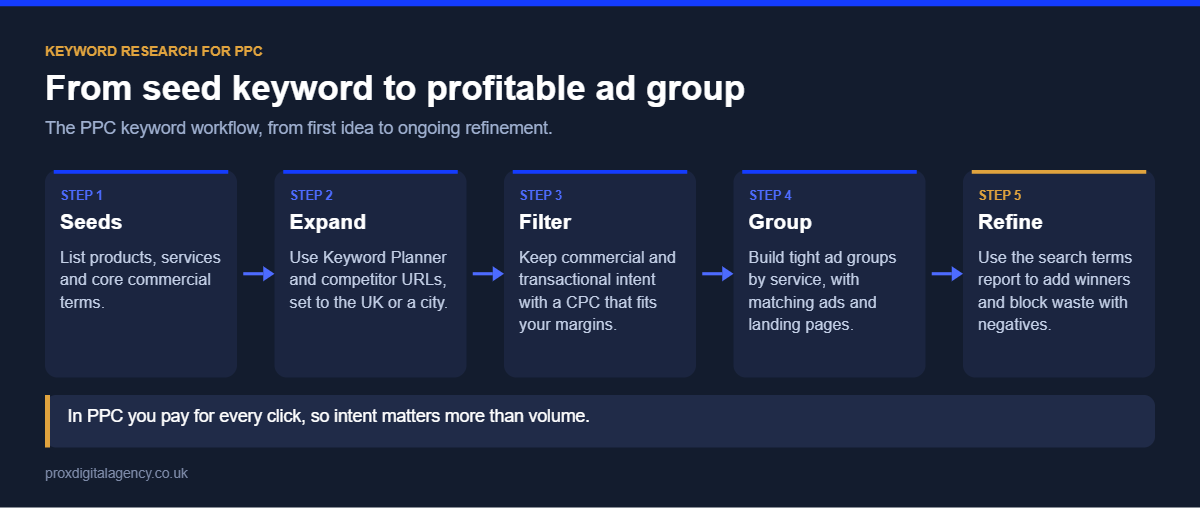
A clear process keeps your time and budget on track. Here is how to do it in two steps.
Start With Seed Keywords
Seed keywords describe what you sell. Therefore, list your products, services and core commercial terms. For example, a software development company might start like this:
- Seed keywords: software development, web development, mobile apps
- Specific keywords: custom software development, business mobile app development
- Long-tail keywords: custom software development for small businesses, mobile app development company for startups
As you can see, long-tail terms are longer and more specific. As a result, they often cost less and convert better. A strong PPC keyword strategy always begins with a clear view of your products, services and target location.
Need more detail on the wider process? Read our step-by-step guide on how to do keyword research for UK businesses.
Use Google Keyword Planner for PPC Keyword Research
Google Keyword Planner is free inside any Google Ads account, so it is the natural starting point for keyword research for Google Ads. Here is how to use it:
- First, open Keyword Planner and select “Discover new keywords”.
- Enter your seed keywords or a competitor’s URL.
- Then choose the UK, or a specific city, as the location.
- Review the search volume, competition and bid estimates.
- Finally, export the best ideas to a spreadsheet.
Competitor URLs are especially useful, because they show which keywords your competitors target and which gaps you can fill. Even so, use them as inspiration rather than copying the list.
How to Select PPC Keywords That Convert
Choosing keywords that convert is a crucial step, since not every keyword is worth paying for. So, filter by intent first and then by relevance.
Prioritise Commercial and Transactional Intent
First, separate research queries from buying queries. The table below makes the difference clear:
In addition, high-intent searches often include words such as:
- price, cost or quote
- book, hire or buy
- near me, or a place name
Look Beyond Search Volume
Volume is only one signal, though. Therefore, check these factors before you commit any budget:
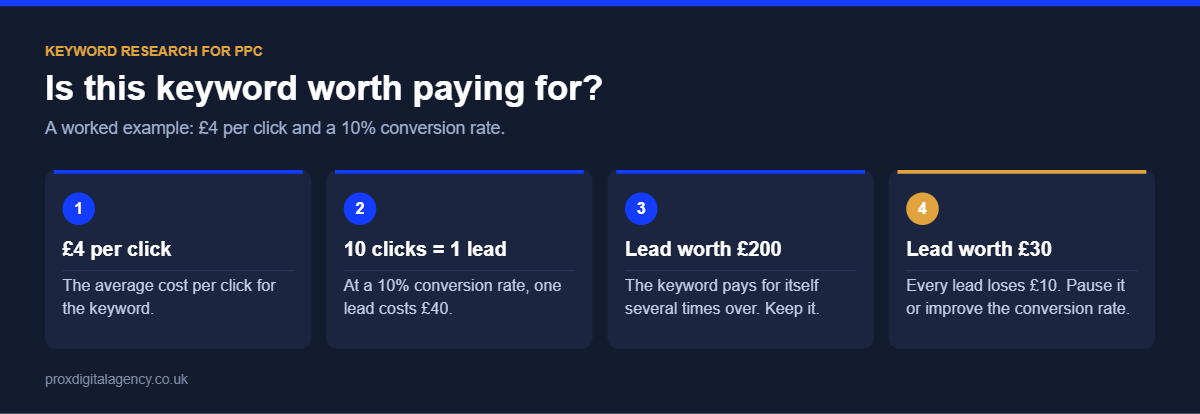
Here is a simple example. Suppose a keyword costs £4 per click and converts at 10%. In that case, you need ten clicks, or £40, to win one lead.
If that lead brings in £200 of income, the keyword pays for itself. However, if a lead is only worth £30, it does not. In short, a keyword is only worth targeting when the value of its conversions justifies the cost of getting them.
Google Ads Cost Calculator: Clicks, Leads and Cost per Lead
Free tool · PPC budget planner
What will your Google Ads budget buy?
Enter your budget, cost per click, conversion rate and lead value to see clicks, leads, cost per lead and your break-even bid. The defaults match the worked example in this guide.
The calculator does simple maths on the numbers you enter. It is not a forecast of results. Real costs per click vary by keyword, location and competition.
How to Organise Keywords Into Ad Groups
Good keyword organisation controls your spending and improves your Quality Scores. Follow four rules:
- Group by theme and intent: keep closely related keywords together.
- Match ads to keywords: in other words, the ad copy should reflect the search term.
- Match landing pages to ads: send people to the page that answers their search.
- Build negative keyword lists: as a result, you block searches that waste budget.
For example, suppose a software development company offers several services. Instead of putting every keyword into one ad group, it separates them by service and search intent:
Build Negative Keyword Lists
Typical negative keywords include free, jobs, course, DIY and template, because these terms attract people who will not buy. Google’s guide to negative keywords explains how each match type works.
Short on time? Our paid search keyword research service gives you a structured, conversion-focused keyword plan built by the Prox Digital Agency team.
Paying for clicks that never turn into enquiries?
Send us your Google Ads search terms report or your service list. We will flag the keywords wasting budget and the high-intent terms you are missing, free.
Get a free Google Ads keyword reviewSee our digital marketing services →
How to Refine Your Keyword Research for PPC
However, launching a campaign is only the start. Your search terms report shows what people actually typed before they saw your ads, so it is the best guide for future decisions.
Check it often, especially in the first few weeks. Then focus on three questions:
- First, which queries triggered your ads?
- Then, which queries produced calls, enquiries or sales?
- Also, which queries used up budget with nothing to show for it?
Next, put the findings to work:
- Firstly, add relevant, high-performing queries as new keywords.
- Then exclude irrelevant queries by adding them to your negative keyword list.
- Similarly, pause keywords that keep spending without converting.
- Also test other match types, ad copy and landing pages.
- Finally, track cost per conversion and return on ad spend.
Over time, steady refinement keeps your budget focused on the searches that bring results.
Keyword Research for PPC Works Best With SEO
Moreover, paid search works best alongside other channels. For example, the converting search terms from your ads show which topics deserve SEO content, while organic rankings can reduce what you spend on the same terms.
Our digital marketing services page shows how Prox Digital Agency connects PPC, SEO and content. For wider context, read our Digital Marketing Guide UK to see how PPC fits into a broader strategy.
Get Expert Keyword Research for PPC Campaigns
PPC keyword research is not about getting the most searches. Instead, it is about finding terms that reflect real demand, show clear intent and have a genuine chance of producing valuable conversions. Only good research focuses your budget on the most promising searches.
Ready to make your PPC budget work harder? Prox Digital Agency can research, plan and manage Google Ads campaigns built around your business goals. Get in touch with our team to discuss your next campaign.
Prox Digital Agency
Make every pound of your PPC budget work harder
We research high-intent keywords, check what each click is worth, build tight ad groups and negative keyword lists, then refine them from your search terms report. Start with a free Google Ads keyword review.
Frequently Asked Questions
What is PPC keyword research?
It is the process of finding and choosing the search terms you bid on in paid campaigns. The focus is on intent, relevance and potential conversions rather than search volume alone.
How long should I wait before judging a keyword?
Wait at least two to four weeks, or until the keyword has enough clicks to show a trend. Low-volume keywords may take longer. Also, judge conversions and cost per conversion, rather than clicks alone.
What makes a good PPC keyword?
A good keyword is relevant, specific and shows buying intent. It also has a cost per click that fits your profit margin.
How many keywords should I use in a PPC campaign?
There is no fixed number. Most ad groups work well with 5 to 20 closely related keywords, because quality and relevance matter more than quantity.
Should I bid on my own brand name?
In most cases, yes. Brand keywords are usually cheap and highly effective, and they stop competitors from taking your customers. However, run brand keywords in their own campaign, so their strong results do not hide how your other keywords perform.

 Prox Digital Agency, London
 5 mins
Prox Digital Agency Named Second in NeuralAdX Ltd’s “Best Google Gemini Optimisation Agency UK” Comparison

International SEO Keyword Research: How We Research New Markets (UK, US, UAE and Australia)
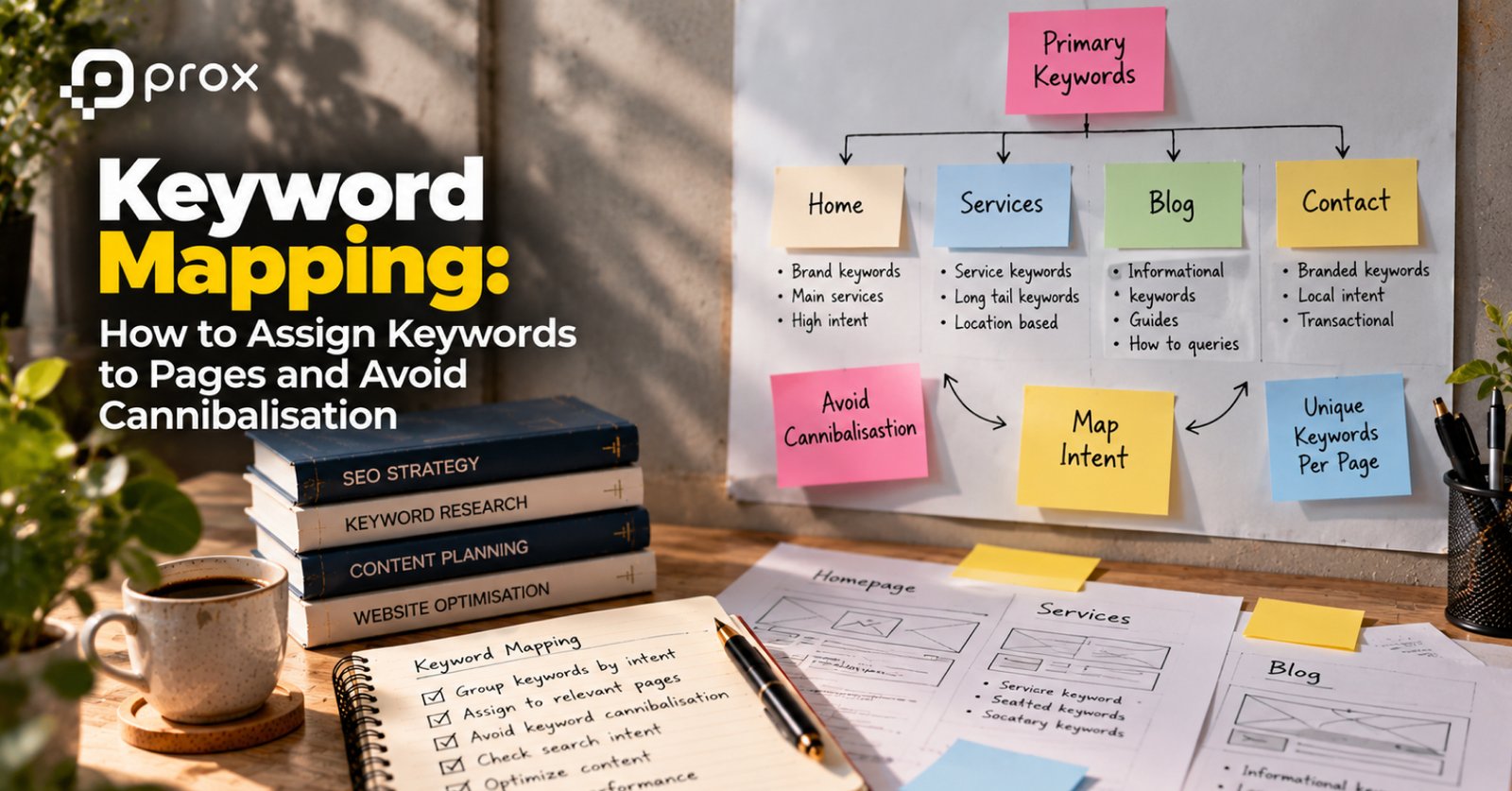
Keyword Mapping: How to Assign Keywords to Pages and Avoid Cannibalisation

Niche Keyword Research: How to Find Low-Competition Keywords Your Competitors Miss
Competitor Keyword Analysis: How to Find and Win the Keywords Your Rivals Rank For

How to Do Keyword Research: A Step-by-Step Guide for UK Businesses (2026)

Headless SEO: How to Rank a Headless CMS or API-Driven Website

Faceted Navigation SEO: Stop Filters Wasting Crawl Budget on Your Ecommerce Site